
Complete Getting Started Guide: Download, Install & Setup SandCrab
The complete guide to getting started with SandCrab - from purchase and download to installation, license activation, AWS setup, and managing your first S3 buckets.
SandCrab is an independent macOS app that helps you interact with, browse and manage your AWS S3 buckets. This complete guide will take you from purchase to browsing your first S3 bucket in just a few minutes.
Step 1: Purchase and Download SandCrab
Getting started with SandCrab is straightforward. You can choose between an Individual license ($20) for personal use or a Team license ($80) for multiple users.
Complete Your Purchase
- Choose Your License: Select Individual ($20) or Team ($80) based on your needs
- Secure Checkout: Complete your purchase using our secure Stripe checkout
- Receive Your License Key: You'll immediately receive your unique license key via email
After completing your purchase, you'll see your license key displayed on the success page. Important: Save this license key as you'll need it during installation.
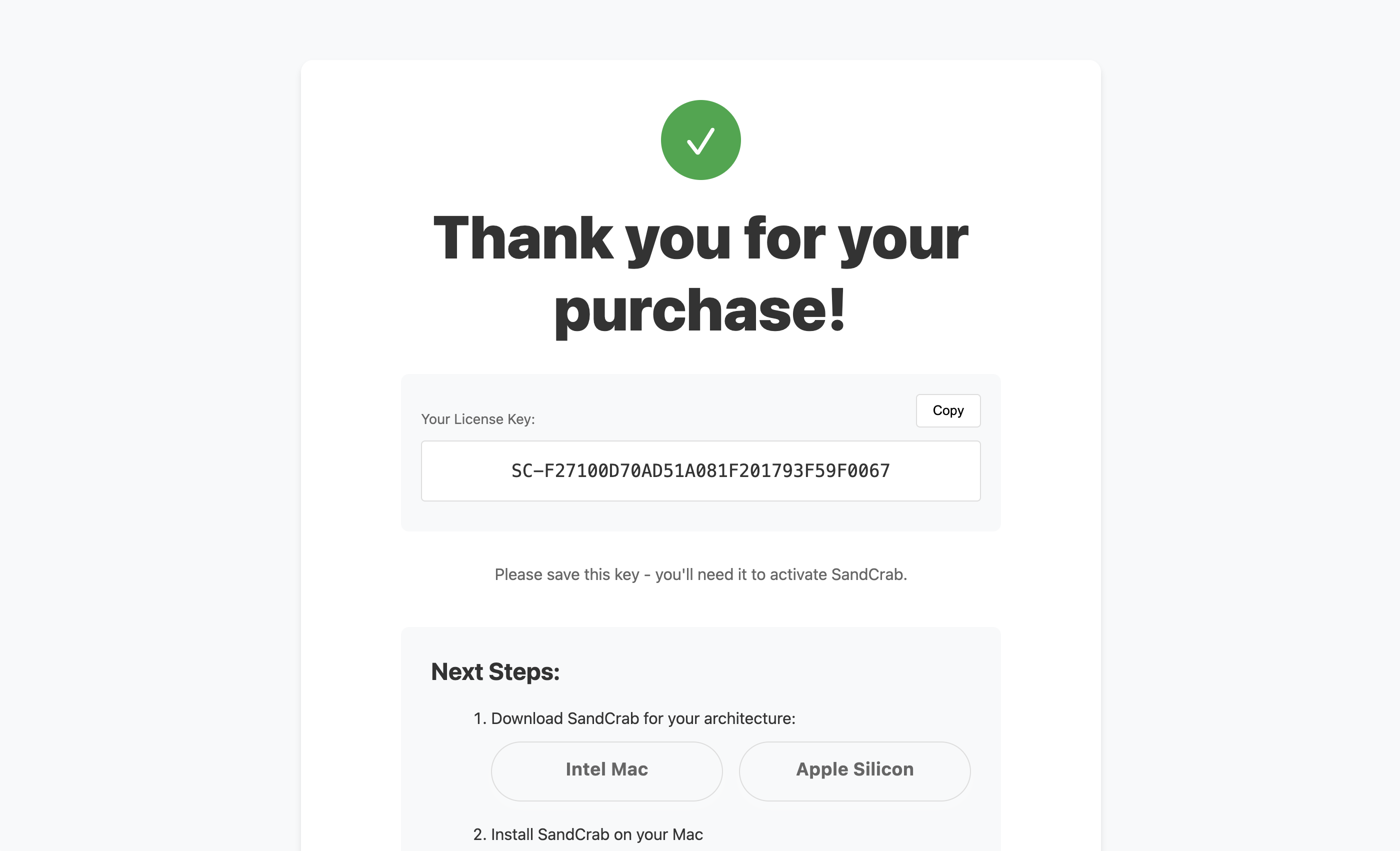
Your license key will be displayed here after purchase
Download the Right Version
SandCrab is available for both Intel and Apple Silicon Macs. Choose the version that matches your Mac:
- Apple Silicon (M1/M2/M3/M4): For newer Macs with Apple's custom chips
- Intel: For older Macs with Intel processors
The download will be a .dmg file (disk image) that contains the SandCrab application.
Step 2: Install SandCrab
Installing SandCrab follows the standard Mac application installation process.
Open the DMG File
- Locate the Download: Find the SandCrab.dmg file in your Downloads folder
- Double-click to Open: This will mount the disk image and open a Finder window
- Install the Application: You'll see the SandCrab app icon and an Applications folder shortcut
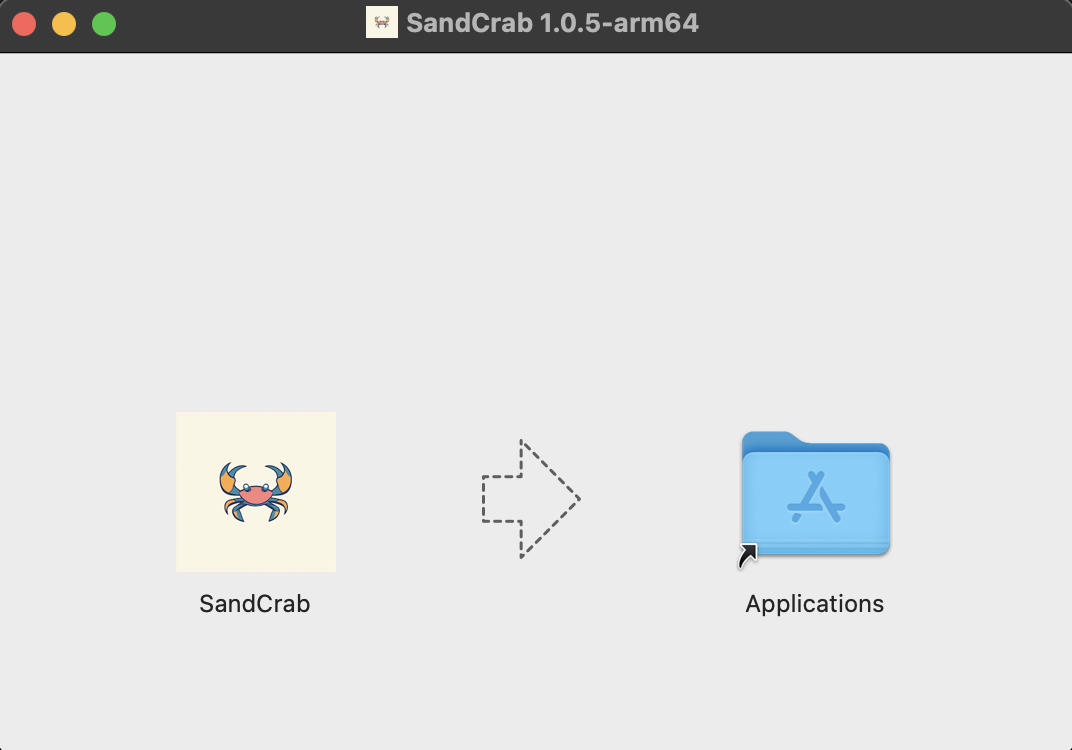
Drag SandCrab to the Applications folder to install
Complete the Installation
- Drag to Applications: Drag the SandCrab icon to the Applications folder
- Wait for Copy: The app will be copied to your Applications folder
- Eject the DMG: You can now eject the disk image from your desktop
First Launch
When you first launch SandCrab, macOS may ask for permission to access your keychain. SandCrab uses your keychain for secure storage.
- Open SandCrab: Double-click SandCrab in your Applications folder
- Keychain Access Prompt: macOS may show you a dialog asking for your password to grant SandCrab keychain access
- Enter Your Password: Type your Mac user account password
- Select "Always Allow": This prevents repeated prompts and allows SandCrab to securely manage your credentials
Step 3: Activate Your License

The first time you launch SandCrab, you'll be prompted to enter your license key.
Enter Your License Key
- License Prompt: SandCrab will automatically show the license activation screen
- Enter Key: Paste or type your license key from the purchase confirmation
- Activate: Click "Activate License" to complete the process
Step 4: Connect Your AWS Account
Now comes the exciting part - connecting SandCrab to your AWS account so you can start managing your S3 buckets.
Create Your First Profile
SandCrab supports multiple ways to connect to your AWS account, allowing you to work with different accounts or environments.
- Create New Profile: Click the "Create New Profile" buton
- Choose Connection Method: Select "Access Key & Secret", "Assume IAM Role", or "AWS CLI Profile"
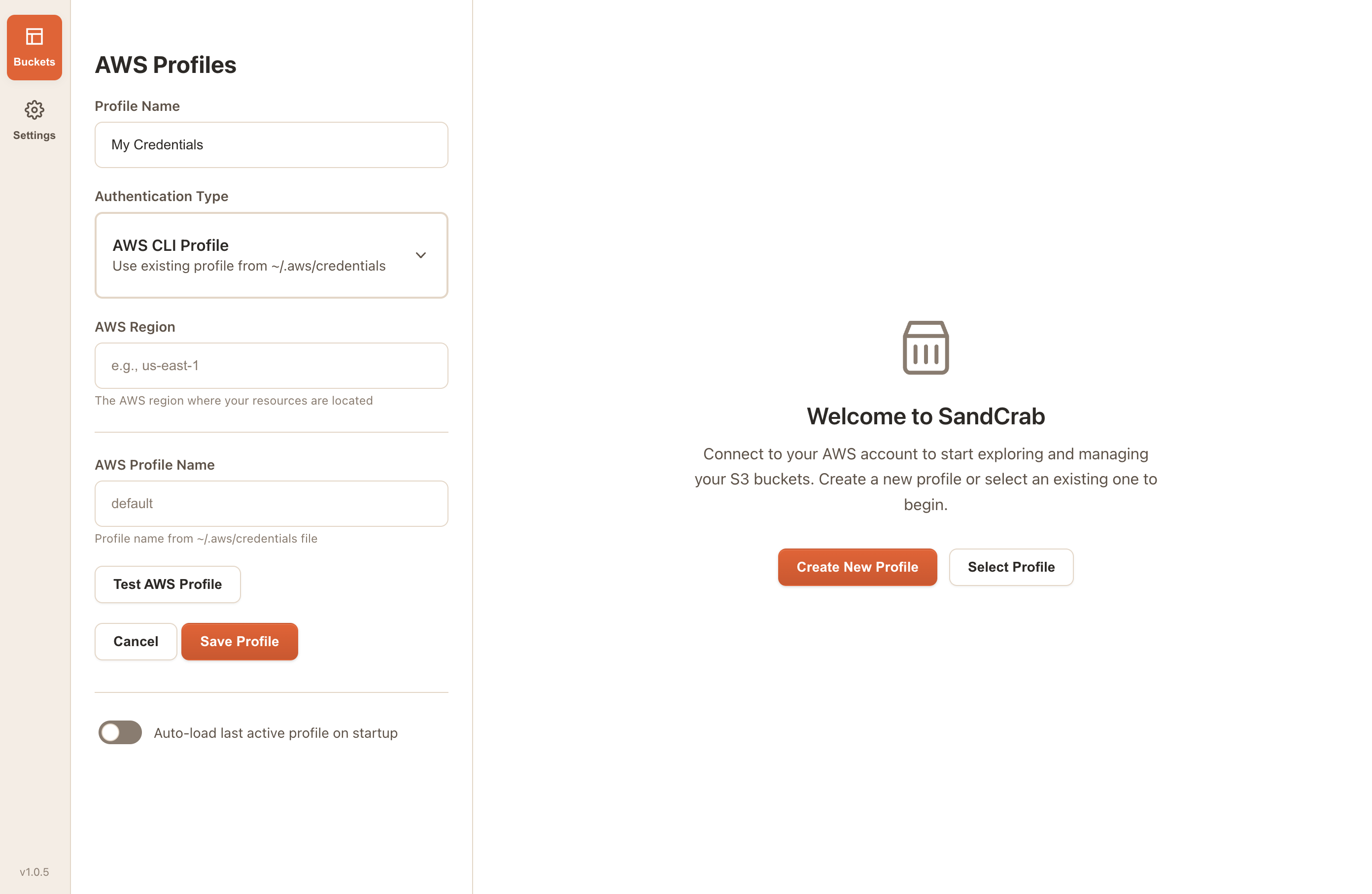
Creating your first AWS profile in SandCrab
For more information on connecting your AWS account to SandCrab, please see our article on how to connect your AWS account to SandCrab.
With your AWS profile configured, you're ready to start exploring and managing your S3 buckets!
Troubleshooting Common Issues
Installation Issues
App won't open due to security settings:
- Go to System Preferences > Security & Privacy
- Click "Open Anyway" next to the SandCrab entry
- Confirm by clicking "Open" in the dialog
License activation fails:
- Check your internet connection
- Verify you're entering the license key exactly as provided
- Contact support if issues persist
AWS Connection Issues
Invalid credentials error:
- Double-check your access key and secret key
- Verify the IAM user has programmatic access enabled
- Ensure the credentials haven't expired
No buckets showing:
- Verify the IAM user has S3 permissions
- Check if you're in the correct AWS region
- Ensure your buckets exist in the selected region
Permission denied errors:
- Review the IAM policies attached to your user
- Check bucket policies for any access restrictions
- Verify you have the necessary S3 permissions